How Democrats Vetoed Redistricting Vetoes
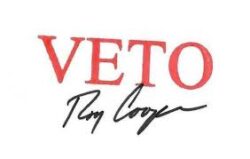
The News & Observer said former Governor Roy Cooper is “to blame” for governors not having the power to veto redistricting bills.
Actually, a lot of Democrats who were in the legislature in the 1990s have to share that blame.
In fact, some Democrats in the state House then – including then-Speaker and now-Senator Dan Blue – didn’t want the governor to have any veto power at all.
It passed only because Republicans supported it. They even wanted to give governors a line-item veto over spending.
The N&O’s Kyle Ingram noted that “North Carolina was the last state in the country to grant veto power to its governor.” The legislature passed the veto in 1995, and voters approved it in a statewide referendum in 1996.
Ingram wrote, “The chief author of that bill? None other than Democrat Roy Cooper — then a state senator from Nash County who would go on to serve two terms as governor and is now running for the U.S. Senate.
“Ironically, Cooper’s tenure as governor was marked by a near-constant succession of redrawn maps he couldn’t veto and overrides of the vetoes he could issue.”
I was working for Governor Jim Hunt when veto passed, and here’s what I recall.
Veto had long been a goal of North Carolina governors – and had long been blocked by legislators jealous of their powers.
In his first term, in 1977, Hunt passed gubernatorial succession over opposition from conservative legislators and Senator Jesse Helms’ political organization.
But the legislature – controlled by Democrats – wouldn’t budge on the veto.
Republicans became veto fans during Republican Governor Jim Martin’s two terms, 1985-1993.
Democratic legislators routinely denied and defied Martin. They even had a little private session where they ceremoniously dumped his proposed budgets into the trash can.
So, Republicans came out for the veto. They even put it in their state party platform.
Senate Democrats also came around to supporting the veto. They passed it in three straight legislative sessions. But, every year, then-Speaker Blue and Democratic House members blocked the bill.
That changed in 1994, when Republicans took the state House in the wake of Newt Gingrich’s “revolution” and President Bill Clinton’s mid-term election meltdown.
Governor Hunt pounced on the opportunity. He proposed the veto in his 1995 State of the State speech.
Some Republicans suddenly had second thoughts, but they stuck by their commitment.
The veto bill originated in the Senate. Senate Democratic leaders like Marc Basnight and Tony Rand supported it, but had their limits.
Their bill, sponsored by Cooper, exempted constitutional amendments, local bills, joint resolutions and electoral maps from the veto. It also set a three-fifths threshold for the legislature to override a veto, rather than two-thirds.
Hunt had to accept the exemptions to pass the bill.
House Republicans had to compromise, too. They wanted the governor to have a line-item veto on spending. The Senate said no, and Republicans gave in.
The veto passed.
But what if it hadn’t?
What if there wasn’t any check at all – even a limited one – on Republicans who’ve controlled both houses of the legislature since 2010?
Or what if a stronger veto had passed?
What if Governor Cooper or Governor Josh Stein could veto redistricting bills?
What if Republicans needed a two-thirds super-majority to override vetoes?
What if Republicans had prevailed on the line-item veto in 1995, and Governor Stein could veto appropriations for private-school vouchers, anti-abortion centers and pork-barrel projects?
This is karma at work in politics.
So often, decisions made on short-term considerations have unintended long-term consequences.

How Democrats Vetoed Redistricting Vetoes
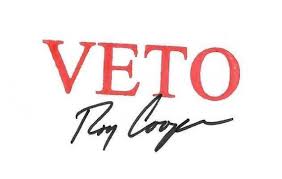
The News & Observer said former Governor Roy Cooper is “to blame” for governors not having the power to veto redistricting bills.
Actually, a lot of Democrats who were in the legislature in the 1990s have to share that blame.
In fact, some Democrats in the state House then – including then-Speaker and now-Senator Dan Blue – didn’t want the governor to have any veto power at all.
It passed only because Republicans supported it. They even wanted to give governors a line-item veto over spending.
The N&O’s Kyle Ingram noted that “North Carolina was the last state in the country to grant veto power to its governor.” The legislature passed the veto in 1995, and voters approved it in a statewide referendum in 1996.
Ingram wrote, “The chief author of that bill? None other than Democrat Roy Cooper — then a state senator from Nash County who would go on to serve two terms as governor and is now running for the U.S. Senate.
“Ironically, Cooper’s tenure as governor was marked by a near-constant succession of redrawn maps he couldn’t veto and overrides of the vetoes he could issue.”
I was working for Governor Jim Hunt when veto passed, and here’s what I recall.
Veto had long been a goal of North Carolina governors – and had long been blocked by legislators jealous of their powers.
In his first term, in 1977, Hunt passed gubernatorial succession over opposition from conservative legislators and Senator Jesse Helms’ political organization.
But the legislature – controlled by Democrats – wouldn’t budge on the veto.
Republicans became veto fans during Republican Governor Jim Martin’s two terms, 1985-1993.
Democratic legislators routinely denied and defied Martin. They even had a little private session where they ceremoniously dumped his proposed budgets into the trash can.
So, Republicans came out for the veto. They even put it in their state party platform.
Senate Democrats also came around to supporting the veto. They passed it in three straight legislative sessions. But, every year, then-Speaker Blue and Democratic House members blocked the bill.
That changed in 1994, when Republicans took the state House in the wake of Newt Gingrich’s “revolution” and President Bill Clinton’s mid-term election meltdown.
Governor Hunt pounced on the opportunity. He proposed the veto in his 1995 State of the State speech.
Some Republicans suddenly had second thoughts, but they stuck by their commitment.
The veto bill originated in the Senate. Senate Democratic leaders like Marc Basnight and Tony Rand supported it, but had their limits.
Their bill, sponsored by Cooper, exempted constitutional amendments, local bills, joint resolutions and electoral maps from the veto. It also set a three-fifths threshold for the legislature to override a veto, rather than two-thirds.
Hunt had to accept the exemptions to pass the bill.
House Republicans had to compromise, too. They wanted the governor to have a line-item veto on spending. The Senate said no, and Republicans gave in.
The veto passed.
But what if it hadn’t?
What if there wasn’t any check at all – even a limited one – on Republicans who’ve controlled both houses of the legislature since 2010?
Or what if a stronger veto had passed?
What if Governor Cooper or Governor Josh Stein could veto redistricting bills?
What if Republicans needed a two-thirds super-majority to override vetoes?
What if Republicans had prevailed on the line-item veto in 1995, and Governor Stein could veto appropriations for private-school vouchers, anti-abortion centers and pork-barrel projects?
This is karma at work in politics.
So often, decisions made on short-term considerations have unintended long-term consequences.